
Why the Canadian Rockies Will Steal Your Heart and Challenge Your Soul
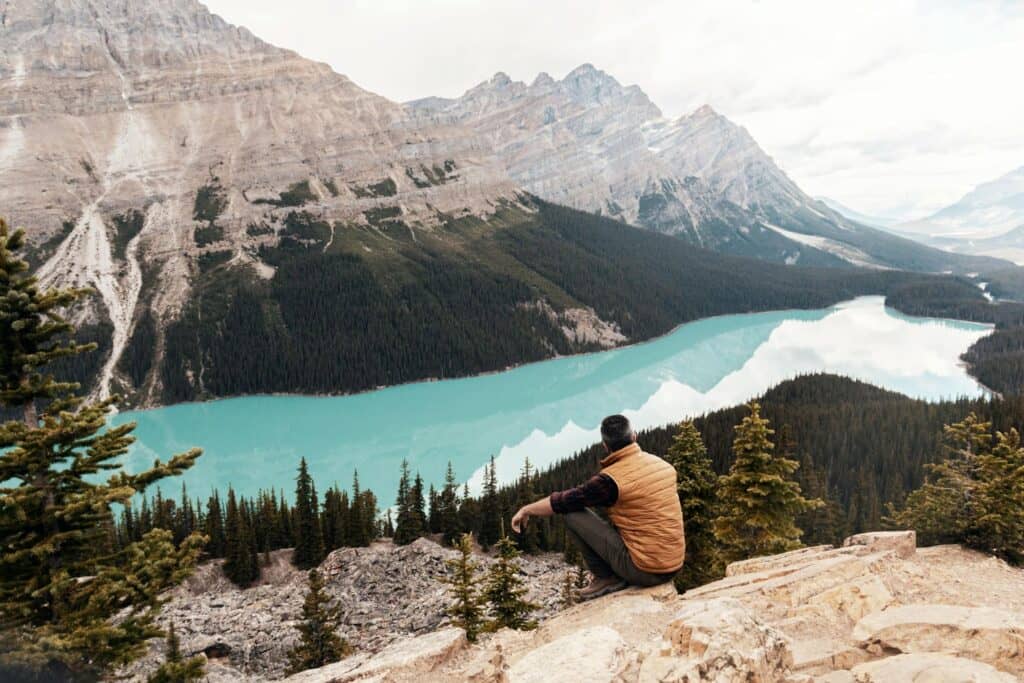
Imagine this: You’re perched on a rugged, wind-whipped ridge, the kind where every gust feels like Mother Nature’s playful shove. Towering peaks jab at the endless blue sky like ancient guardians, their jagged edges etched from eons of ice and rock drama. Far below, a jewel-toned turquoise lake winks back at the heavens, while massive glaciers hug distant summits like stubborn, frozen rivers refusing to melt away. The air? It’s that crisp, oxygen-sparse elixir that hits you like a shot of pure adrenaline—thin, invigorating, and utterly addictive. This is the Canadian Rockies hiking paradise, a raw wilderness that doesn’t just redefine adventure; it grabs your spirit and reshapes it into something wilder, wiser, and forever hooked.
But hold on—these aren’t your average mountains. They’re a pulsating, ever-evolving masterpiece, where every best hike in the Canadian Rockies whispers tales of geological fireworks: volcanoes long silenced, continents colliding, and ice ages sculpting masterpieces. From the postcard-perfect pinnacles of Banff to the untamed wilds of Jasper, this region serves up hiking experiences in the Canadian Rockies that span from leisurely lakeside ambles (perfect for that reflective solo stroll) to pulse-racing alpine scrambles that test your mettle. Craving that killer Instagram snap at Lake Louise? Or perhaps the kind of soul-deep solitude only a multi-day backcountry trek can deliver? The Rockies don’t just meet expectations—they shatter them, leaving you with a fresh lens on the world’s raw beauty.
In this jam-packed Canadian Rockies hiking guide, I’ll arm you with all the insider scoops to turn those dreamy visions into boots-on-the-ground reality. We’ll dive into the nitty-gritty: permits, gear hauls, and smart planning. But we’ll also uncover those hidden-gem trails bursting with jaw-dropping scenery. Picture day hikes capping off with a steamy cup of tea at a historic hut, or epic multi-day quests that push your limits while rewarding you with starry nights and sunrise symphonies. Get ready to see why the Canadian Rockies top every list of world’s best hiking destinations—and why, after one trip, you’ll be plotting your return before you’ve even unpacked.
Planning Your Adventure: Turning Dreams into Doable Quests
Best Time to Visit the Canadian Rockies for Hiking
The Canadian Rockies are like that charismatic friend who changes outfits with the seasons, each one more captivating than the last. Summer (July to September) is the undisputed king for peak hiking season in the Canadian Rockies, when alpine meadows erupt in a riot of wildflowers—think vibrant lupines and fireweed painting the landscape like a living Van Gogh. July and August? They’re your goldilocks months: warm days (highs around 20-25°C/68-77°F) ideal for summiting tough peaks, and nights cool enough for cozy camping under the Milky Way. But here’s the fun twist—crowds flock like moths to a flame at hotspots like Lake Agnes or Plain of Six Glaciers. Pro tip: Hit the trails at dawn for that magical alone-with-nature vibe, dodging the tour bus hordes.
Come late September to early October, and it’s like the mountains throw a golden gala. Aspen groves blaze in fiery yellows and oranges, cooler temps (10-15°C/50-59°F) make hiking a breeze, and the air hums with that autumn crispness. It’s prime time for seasoned hikers chasing solitude, though weather can flip like a coin—sunny mornings turning to flurries by afternoon. Many high-alpine paths shut down by October, blanketed in snow, adding a layer of unpredictability that’s part of the thrill. Deeper insight: This shoulder season teaches resilience; it’s when you learn that true adventure isn’t about perfect conditions, but embracing the wild’s whims.
Spring (May-June) flips the script with thundering waterfalls from melting snowpacks—imagine Johnston Canyon’s cascades roaring like nature’s symphony. Lower trails shine with fewer crowds, but high passes stay snowbound, demanding microspikes or snowshoes for the bold. Winter? Oh, it’s a crystalline fairy tale for winter hiking in the Canadian Rockies, transforming paths into snowshoe wonderlands. But it calls for avalanche smarts and gear like insulated boots—think of it as the ultimate test of your inner explorer, rewarding you with silent, sparkling vistas that feel otherworldly.
Essential Permits and Passes for Canadian Rockies Hiking
Heads up, adventure seekers: From June 20 to September 2, 2025, Parks Canada is rolling out the red carpet with free admission to Canadian national parks and discounted overnight stays at select spots. It’s a budget-savvy bonanza, letting you hop between parks without the usual entry fees—perfect for multi-park marathons!
Outside that window, snag a Parks Canada Discovery Pass for seamless access to over 80 sites for a full year. Prices? Adults pay about $75.25 CAD, seniors $64.50 CAD, and family/groups $151.25 CAD— a steal if you’re a repeat offender in these peaks. Day hikes usually just need park entry (around $11 CAD per adult daily), but backcountry camping? That’s reservation roulette via Parks Canada’s system, especially for gems like Jasper’s Skyline Trail. Book months ahead; spots vanish faster than morning mist.
Some trails straddle provincial lines, so double-check for extra permits. Rules shift with seasons—snow might close paths, or wildlife closures pop up.
Insight: These regs aren’t bureaucracy; they’re guardians of this fragile ecosystem, ensuring future generations get their shot at Rocky magic.
Choosing Your Base Camp in the Canadian Rockies
Banff? It’s the buzzing epicenter of Rocky Mountain adventures, blending top-tier perks with trail access that’ll make your heart sing. Picture a lively town pulsing with global vibes: savor sushi one night, Alberta steak the next, all while stocking up at gear shops like Monod Sports. Lodging runs the gamut—budget hostels around $50-100 CAD/night, mid-range hotels $300-500 CAD/night, or splurge on luxury lodges like the Fairmont Banff Springs at $600+ CAD. Its spot-on location? Prime for hitting Lake Louise, Johnston Canyon, and Bow Valley trails without breaking a sweat.
Jasper flips to a chill, authentic vibe—less glitz, more genuine wilderness charm in this UNESCO gem. It’s your launchpad for the Skyline Trail and vast Jasper National Park explorations. Town feels like a cozy mountain hamlet: grab craft brews at Jasper Brewing Co. (pints ~$8-10 CAD), and snag accommodations from hostels ($40-80 CAD/night) to hotels ($400-600 CAD in peak season).
Fun fact: Jasper’s dark skies make it a stargazing haven—imagine unwinding under a cosmic blanket after a grueling hike.
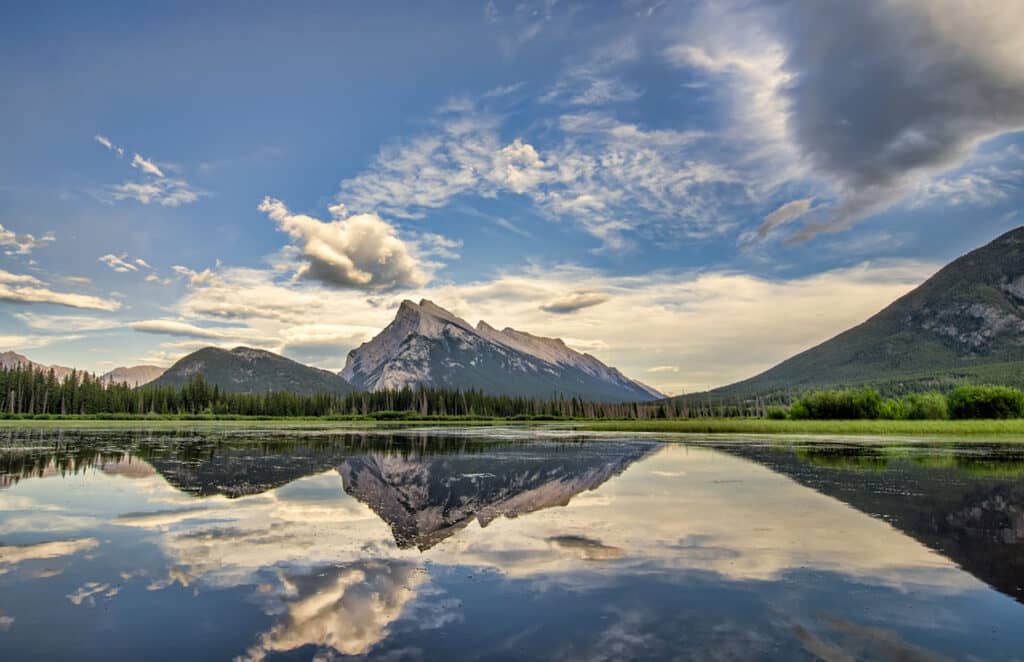
Canmore? It’s the underdog hero just outside Banff, dishing out real-deal mountain town life with killer value. Views of the Bow Valley? Stunning. Expect vacation rentals for groups at $200-400 CAD/night, cheaper than Banff’s premiums. It’s your gateway to both Banff and Kananaskis hikes, with a laid-back scene for post-trail pints.
Lake Louise? Pure Rocky royalty. The iconic lake is your trailhead for legends like Plain of Six Glaciers. Stays are scarce and spendy—Fairmont Chateau Lake Louise hits $700+ CAD/night—but waking steps from the action? Priceless for beating crowds with sunrise starts.
Gear & Preparation: Gear Up Like a Pro Explorer
Must-Have Hiking Gear for Canadian Rockies Trails
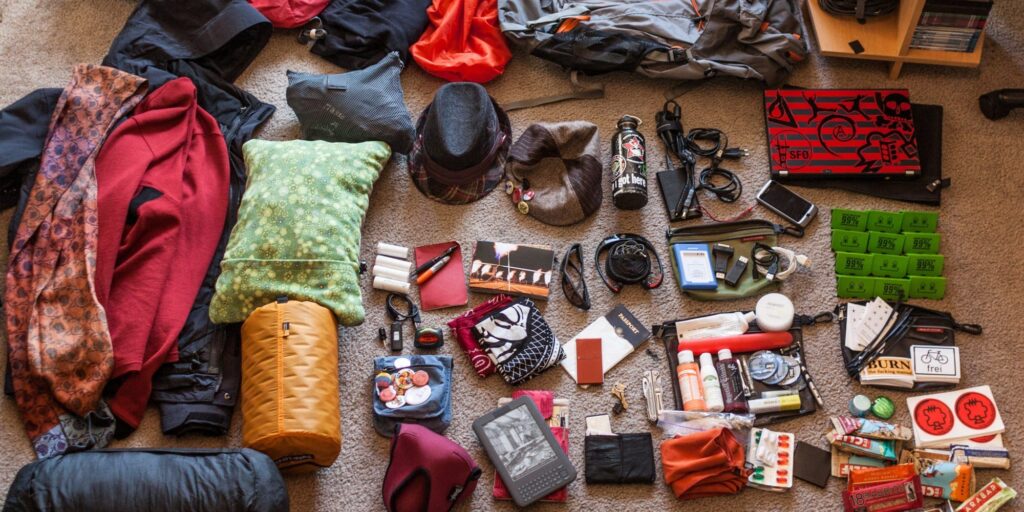
Rocky weather’s a sneaky shapeshifter—balmy to blizzard in hours—so gear smartly for safety and giggles. Start with sturdy hiking boots ($150-300 CAD) boasting ankle support; trails morph from silky paths to treacherous scree, where a slip could spoil the fun. Layer like an onion: moisture-wicking bases ($20-50 CAD), fleecy mids ($50-100 CAD), and waterproof shells ($100-200 CAD). Even summer highs can plummet at altitude—I’ve shivered in July snow flurries!
Bear spray? Non-negotiable in grizzly turf. Rent it in Banff for $9-10 CAD/day (or buy ~$50 CAD). Keep it holstered, practice draws—it’s your furry-friend deterrent. Navigation? Maps, compass, GPS apps (free offline like AllTrails). Add water (purify streams to dodge giardia), energy bars, first aid ($20 kit), headlamp, and bivy sack.
For alpine jaunts: Sunglasses ($20+), sunscreen, wool hat—UV rays bounce like ping-pong balls off snow.
Packing for Changing Weather in the Rockies
Pack rain gear always—thunderstorms brew like clockwork. Warm layers too; temp drops 30°F from valley to peak. Emergency kit? Space blanket, extra grub, gloves— they’ve turned potential disasters into mere stories.
Fun insight: Weather prep isn’t paranoia; it’s your ticket to deeper immersion, teaching humility amid nature’s power.
Fitness and Safety Preparation for Rocky Hikes
These trails are no joke—elevations soar, terrain bites. Train months out: Cardio, hill sprints, pack-loaded walks. Gains of 1,000-3,000 feet demand lung power. Test your setup on local hills to nix blisters.
Learn first aid: Spot altitude woes (headaches at 2,500m+), hypothermia.
Insight: Fitness builds confidence, turning challenges into triumphs that inspire lifelong wanderlust.
Iconic Day Hikes: Day Trips That Pack a Punch
Lake Agnes Tea House Hike: A Sweet Reward in Banff
This 7km round-trip is Rocky romance: Start at Lake Louise’s emerald shores, climbing through whispering forests to Mirror Lake’s glassy reflections at 2.5km. Switchbacks unveil Bow Valley vistas, leading to Lake Agnes’s cirque. The 1905 tea house? Earn your scones and soup (~$10-15 CAD) with that steady ascent. Arrive pre-10 AM for prime seats; circle the lake for peak panoramas. Fun twist: It’s like a fairy tale quest—tea as treasure!
Plain of Six Glaciers: Glacier Glory Near Lake Louise
14km of epic: Skirt Lake Louise, ascend through forests to moraines echoing glacial tales. At 5.5km, the tea house perches amid icy giants—continue to viewpoints for Victoria Glacier’s majesty. Geological insights: Witness retreating ice, a poignant reminder of climate change. Return views? Fresh angles on this natural cathedral. Pro insight: Pack layers; winds howl like ancient spirits.
Johnston Canyon & Ink Pots: Waterfall Wonders
5.8km to Upper Falls via catwalks in a misty limestone gorge—rainbows dance in spray! Lower Falls (2.4km) suits families; extend to Ink Pots’ surreal mineral pools. Early/late visits dodge crowds; winter? Ice palace magic. Storytelling: Canyon’s carved by millennia, a lesson in patience and power.
Parker Ridge: Glacier Gazing in Jasper
5.4km payoff: Climb from Icefields Parkway through subalpine to Saskatchewan Glacier overlooks. Alpine winds bite—layer up! Value? World-class views for moderate effort, inspiring awe at icefields feeding rivers.
Crypt Lake Trail: Adventure Overload in Waterton
17.8km thriller: Boat shuttle (~$30 CAD) to start, steep forests, falls, then tunnel crawl and cables to a hidden lake. Boat timetable adds urgency—pure adrenaline! Insight: Tests boundaries, fostering growth through challenge.
Multi-Day Backpacking Adventures: Immersive Wilderness Quests
Skyline Trail: Ridge-Walking Heaven in Jasper
44km over 2-3 days: From Maligne Lake, soar above treeline, spotting sheep and goats. Traverse valleys, camp by lakes under stars. Reserves fill fast—book early! Tops lists with Magog and Berg Lake for reason: Constant panoramas teach ecosystem interconnectedness.
Rockwall Trail: Cliffside Spectacle in Kootenay
55km, 3-5 days: Hug limestone walls, glaciers, lakes. Camps at Floe Lake etc. Fewer crowds mean solitude; goats and pikas abound. Demands fitness—rewards with untamed beauty insights.
Berg Lake Trail: Up Close with Giants in Mount Robson
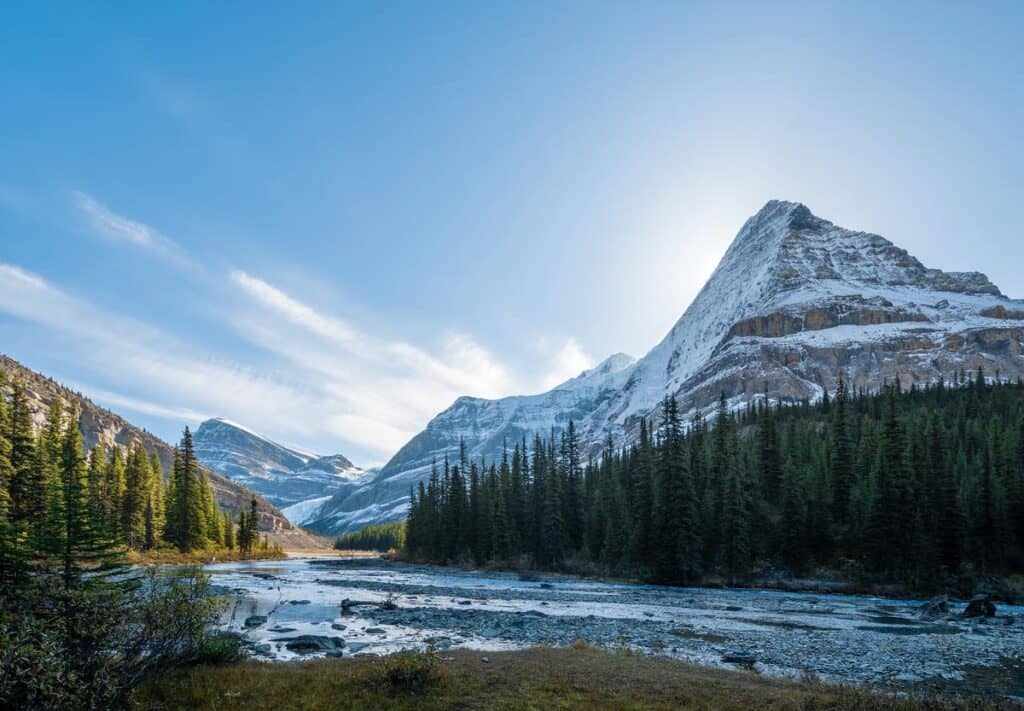
23km out-and-back: Gentle grade through forests to Berg Lake’s iceberg-dotted waters below 3,954m Robson. Dramatic amphitheater—calving glaciers boom like thunder. Accessible yet awe-inspiring, it hums with nature’s raw force.
Tips for Backcountry Camping in the Canadian Rockies
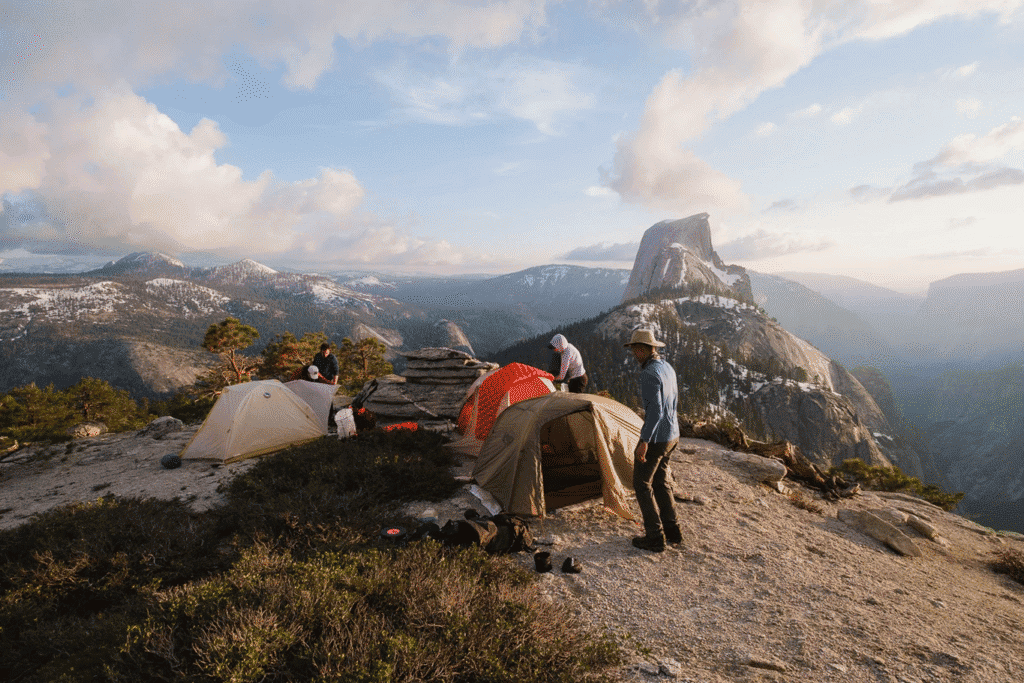
Plan ahead: Reserves open early, use bear-proof storage. Four-season gear for volatile weather. File plans, carry sat messengers (~$150+). Leave No Trace: Pack out everything, preserving for others. Fun: Nights under stars? Ultimate reset button.
Wildlife & Safety: Coexisting with Rocky Residents
Bear Awareness: Dancing with the Locals
Black bears (125-300 lbs, climbers) and grizzlies (200-600 lbs, humped shoulders) rule here. Make noise, group up, spray ready. Store food high; no feeding! Most encounters? Peaceful if respectful. Insight: Bears embody wild respect—learning coexistence inspires environmental stewardship.
Moose, Elk, and Mountain Goats: Other Wild Characters
Moose (700 lbs) charge in rut—keep 25m back. Elk rut aggressively; goats seek salt—don’t let them lick gear! Fun: Wildlife spotting’s like a safari, adding thrill.
Trail Etiquette & Leave No Trace: Being a Good Mountain Citizen
Pack out trash, stick to paths—alpine plants heal slowly. No feeding wildlife; yield uphill. Leash pets. Insight: Etiquette ensures sustainability, letting adventures endure.
Beyond the Trails: Recovery and Revelry
Hot Springs for Post-Hike Bliss
Soak sore muscles in Banff Upper Hot Springs (~$17.50 CAD adult)—Bow Valley views! Radium (~$15 CAD) in canyons. Miette? Hike-in wilderness. Fun: Nothing beats bubbling in 40°C waters amid peaks—pure therapy!
Scenic Drives: Icefields Parkway Magic
232km Banff-Jasper link: Peyto Lake, Athabasca Falls, Columbia Icefield. Stop for wildlife, walks. Insight: Reveals geology’s epic story.
Local Eats and Brews: Fueling the Fun
Banff’s Grizzly House: Exotic meats, fondue (~$40-60 CAD/meal). Breweries: Pints $8-10 CAD. Average meals: Casual $15-25 CAD, upscale $30-50 CAD. Try Alberta beef—connects plate to place.
Iconic Multi-Day Adventures (Continued): Deeper Dives
Extend Valley of the Five Lakes or Iceline for solitude, glaciers. Insights: Multi-days foster disconnection from tech, reconnection with self.
Practical Tips: Logistics for Smooth Sailing
Transportation Options for Canadian Rockies Travel
Rent cars from Calgary (~$50-100 CAD/day) for freedom. Shuttles/transit for non-drivers (~$20-50 CAD rides).
Accommodation Options in the Rockies
Campgrounds: $24-78 CAD/night (e.g., Tunnel Mountain). Hostels $40-100 CAD; lodges $600+ CAD; Canmore rentals $200-400 CAD.
Budgeting Tips for Affordable Hiking
Leverage 2025 free entry. Discovery Pass saves big. Groceries in Calgary; rent gear (bear spray $9/day). Shoulders for deals.
Advanced Planning Considerations: Pro-Level Prep
Altitude and Acclimatization Tips
Acclimatize in Banff (1,383m); hydrate. Symptoms? Descend. Insight: Teaches body awareness.
Weather Monitoring Essentials
Check forecasts; pack versatile. Turn back wisely—safety first.
Emergency Preparedness in the Wilderness
Sat devices; first aid; plans. Self-reliance key.
Seasonal Highlights: Nature’s Showstoppers
Summer Wildflower Spectacle
Meadows bloom July-August—track via forums.
Fall Colors and Wildlife Drama
Gold aspens, rutting elk—extra caution.
Winter Wonderland Adventures
Snowshoe, ice climb—gear up for solitude.
Essential Travel Tips: Final Nuggets for Your Journey
Echoing above: Transport, stays, budgets—plan smart for max fun.
Answer the Call of the Peaks
The Canadian Rockies? Earth’s hiking mecca, scaling from family jaunts to mountaineer tests. Memories here? Transformative: Earned views, starry camps, shared tales. Prep well, respect nature—they’ll gift inspiration eternal. Peaks calling? Lace up and go—adventure awaits!
Frequently Asked Questions About Hiking in the Canadian Rockies
What is the best time of year to hike in the Canadian Rockies?
The best time to hike in the Canadian Rockies is July to September, when warm weather (20-25°C/68-77°F) and blooming wildflowers make trails like Lake Agnes and Plain of Six Glaciers ideal. Late September to early October offers stunning fall colors and fewer crowds, though weather can be unpredictable. Spring (May-June) is great for lower-elevation trails with roaring waterfalls, while winter hiking requires snowshoes and avalanche knowledge. Each season brings unique rewards, so choose based on your adventure style.
Do I need permits to hike in the Canadian Rockies?
For day hikes, a Parks Canada entry pass (~$11 CAD/adult/day) is typically enough. From June 20 to September 2, 2025, Parks Canada offers free admission to national parks, saving you on entry fees. For backcountry camping, like on the Skyline Trail or Rockwall Trail, you’ll need a backcountry permit booked through the Parks Canada reservation system—reserve early, as spots fill fast. Some cross-provincial trails need extra permits; check regulations for your route.
What are the best base towns for hiking in the Canadian Rockies?
- Banff: A vibrant hub with easy access to Lake Louise, Johnston Canyon, and Bow Valley trails. Offers hostels ($50-100 CAD/night), hotels ($300-500 CAD), and luxury lodges ($600+ CAD).
- Jasper: A laid-back base for Skyline Trail and Jasper National Park, with hostels ($40-80 CAD) and hotels ($400-600 CAD).
- Canmore: Affordable with rentals ($200-400 CAD/night), great for Banff and Kananaskis hikes.
- Lake Louise: Pricey ($700+ CAD at Fairmont) but perfect for iconic trails like Plain of Six Glaciers. Choose based on budget and vibe—Banff for energy, Jasper for calm, Canmore for value, Lake Louise for proximity.
What gear is essential for hiking in the Canadian Rockies?
You’ll need sturdy hiking boots ($150-300 CAD) for varied terrain, layered clothing (base $20-50 CAD, fleece $50-100 CAD, waterproof shell $100-200 CAD), and bear spray ($50 CAD or $9-10 CAD/day rental) for safety in bear country. Pack navigation tools (maps, compass, offline GPS like AllTrails), water purifier, first aid kit ($20), headlamp, and emergency shelter. For alpine hikes, add sunglasses, sunscreen, and a wool hat. Weather shifts fast—pack rain gear and warm layers even in summer.
How do I stay safe from wildlife while hiking in the Canadian Rockies?
The Rockies host black bears and grizzlies—carry bear spray, make noise while hiking, and travel in groups. Store food in bear-proof containers or hang it 4m high, 1.5m from tree trunks. For moose and elk, keep 25m distance, especially during fall rutting season. Mountain goats may approach for salt—don’t let them lick gear. Never feed wildlife, and back away slowly during encounters. Learn bear safety techniques before hitting the trails.
What are the best day hikes in the Canadian Rockies?
Top picks include:
- Lake Agnes Tea House (Banff): 7km round-trip, moderate, with tea house treats ($10-15 CAD) and Lake Louise views.
- Plain of Six Glaciers (Lake Louise): 14km, moderate, with glacier vistas and a historic tea house.
- Johnston Canyon & Ink Pots (Banff): 5.8km to Upper Falls, easy-to-moderate, with waterfalls and colorful springs.
- Parker Ridge (Jasper): 5.4km, moderate, for Saskatchewan Glacier views.
- Crypt Lake Trail (Waterton): 17.8km, challenging, with a boat ride (~$30 CAD), tunnel, and alpine lake. Start early to avoid crowds.
Read more: https://oceansbeyondpiracy.org/your-luxurious-denver-winter-escape-for-burns-supper/
What are the best multi-day backpacking trips in the Canadian Rockies?
Epic options include:
- Skyline Trail (Jasper): 44km, 2-3 days, with alpine ridges and wildlife.
- Rockwall Trail (Kootenay): 55km, 3-5 days, along dramatic limestone cliffs.
- Berg Lake Trail (Mount Robson): 23km out-and-back, 1-2 days, with views of Mount Robson and iceberg-dotted Berg Lake. Book backcountry permits early and follow Leave No Trace principles.
How should I prepare for the weather in the Canadian Rockies?
Weather can shift from sunny to stormy in hours. Always pack rain gear, warm layers (temps drop 30°F from valley to peak), and an emergency kit (space blanket, extra food, gloves). Check forecasts before hiking, but be ready for sudden changes—afternoon thunderstorms are common in summer. Learn to spot storm signs like lenticular clouds or dropping temps, and don’t hesitate to turn back if conditions worsen.
How can I hike the Canadian Rockies on a budget?
Take advantage of free park admission from June 20 to September 2, 2025. A Parks Canada Discovery Pass ($75.25 CAD/adult) saves money for multi-park visits. Campgrounds ($24-78 CAD/night) like Tunnel Mountain or Whistlers are budget-friendly. Buy groceries in Calgary or Canmore to avoid pricey resort stores, and pack trail lunches. Rent gear like bear spray ($9/day) instead of buying. Visit in shoulder seasons (June, late September) for cheaper lodging and fewer crowds.
What should I know about altitude and acclimatization for Rockies hiking?
Many trails exceed 2,500m (8,200 ft), where lower oxygen can cause headaches, nausea, or fatigue. If coming from sea level, spend 1-2 days acclimatizing in Banff (1,383m/4,537 ft). Stay hydrated, avoid alcohol initially, and descend if symptoms worsen (e.g., confusion, breathing issues). Training with cardio and hill walks preps your body for elevation gains of 1,000-3,000 ft.
Are there hot springs or other post-hike activities in the Canadian Rockies?
Yes! Banff Upper Hot Springs (~$17.50 CAD/adult) offers Bow Valley views, while Radium Hot Springs (~$15 CAD) in Kootenay has a canyon setting. Miette Hot Springs near Jasper requires a short hike for a wilder soak. The Icefields Parkway (Banff to Jasper, 232km) is a must-drive for Peyto Lake and Athabasca Falls. Dining? Try Banff’s Grizzly House for fondue ($40-60 CAD/meal) or craft brews at Jasper Brewing Co. ($8-10 CAD/pint).
How do I get to the Canadian Rockies and get around?
Rent a car from Calgary International Airport (~$50-100 CAD/day, 90 min to Banff) for flexibility. Shuttles and public transit (~$20-50 CAD) connect Banff, Lake Louise, and Jasper to trailheads like Johnston Canyon. Guided tours offer curated experiences but limit freedom. All-wheel drive helps on gravel roads but isn’t essential for most trails.
What are the Leave No Trace principles for hiking in the Canadian Rockies?
Pack out all trash (even orange peels), stick to trails to protect alpine plants, and camp only in designated sites. Don’t feed wildlife to avoid dangerous habits. Yield to uphill hikers and keep pets leashed. Follow fire restrictions to prevent wildfires. These practices preserve the Rockies’ pristine beauty for future adventurers.
What emergency preparations should I make for Rockies hiking?
Cell service is spotty, so carry a satellite messenger (~$150+ CAD) for remote trails. Share a detailed itinerary with expected return times with a contact. Pack a first aid kit and learn to treat altitude sickness, hypothermia, and injuries. Know evacuation routes—some areas require helicopter rescue. Insight: Self-reliance is key in the wild Rockies.
What seasonal highlights should I look for when hiking in the Canadian Rockies?
- Summer (July-August): Wildflower blooms (larkspur, paintbrush) on trails like Parker Ridge.
- Fall (September): Golden aspens and active wildlife (elk rut, bear foraging)—stay cautious.
- Winter: Snowshoeing and frozen waterfalls for solitude, but requires traction devices and avalanche training. Check park reports for peak wildflower or color updates.